
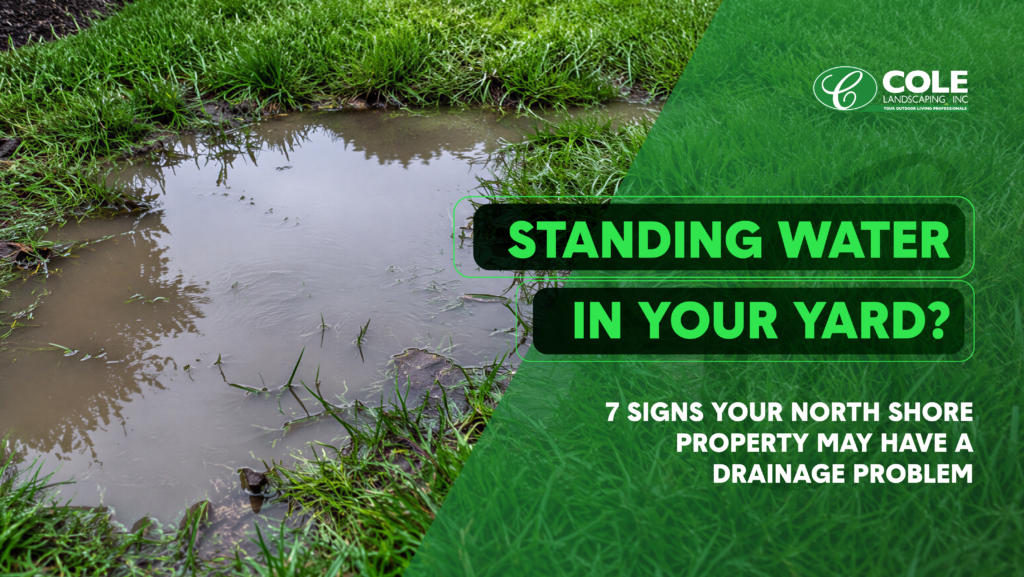
How to spot drainage issues before they begin affecting your lawn, gardens, and property
A little water after a Massachusetts rainstorm is normal. But when puddles stick around, sections of your lawn stay soggy, or runoff continually washes through the same areas, your landscape may be telling you that something isn’t working correctly.
For North Shore homeowners, drainage can be especially important because every property handles water differently. Grading, soil conditions, downspouts, planting areas, patios, and other landscape features can all influence where water travels after heavy rain.
Ignoring a drainage problem can lead to more than an inconvenient muddy patch. Over time, excess water can affect lawns, planting beds, hardscapes, and areas surrounding the home.
7 Signs Your Property May Have a Drainage Problem
Puddles Stay Long After the Rain Stops
One of the most obvious signs of poor drainage is standing water that remains in your yard well after a storm.
- In low areas of the lawn
- Along walkways or patios
- Near planting beds
- Beneath downspouts
- Close to the house
Occasional puddles may not be concerning, but repeatedly seeing water collect in the same location can indicate that runoff has nowhere to go.
A professional drainage plan can help redirect that excess water toward a more appropriate location.
Parts of Your Lawn Are Constantly Soggy
Does one section of your lawn feel soft or muddy even when the rest of the property is dry?
Consistently saturated soil can make it difficult for turf to stay healthy. Too much moisture may limit oxygen around the roots and create conditions where grass struggles.
- Mushy underfoot
- Difficult to mow
- Thin or patchy
- Frequently muddy
- Slow to dry after rain
Treating the grass alone may not solve the underlying issue if drainage is the real problem.
Water Is Washing Away Soil or Mulch
Runoff can become surprisingly powerful when water repeatedly follows the same path across a property.
- Mulch washing out of garden beds
- Exposed plant roots
- Channels forming through soil
- Soil collecting at the bottom of a slope
- Gravel or other materials shifting after storms
These are common signs of erosion. Controlling where water travels can help protect planting areas and preserve the shape and appearance of your landscape.
Your Garden Beds Stay Too Wet
Plants need water—but too much can be just as problematic as too little.
If garden beds remain saturated for long periods, plants may struggle because their roots do not have the drainage they need.
- Plants declining despite regular care
- Soil that remains wet for days
- Water collecting around shrubs
- Repeated replacement of plants in the same area
Before assuming the plants themselves are the issue, look at how water is moving through the bed.
Quick Yard Drainage Check
Water Collects Near Your Foundation
This is one drainage warning sign homeowners should pay particular attention to.
The landscape surrounding a home should help direct water away rather than allowing it to continually collect near the foundation.
- Improper grading
- Downspout discharge
- Low areas near the house
- Heavy runoff from surrounding surfaces
- Inadequate drainage systems
Managing the water at the landscape level can help keep runoff moving in the right direction.
Your Walkways or Patio Areas Stay Wet
Drainage problems aren't limited to lawns.
Water may also collect around patios, walkways, driveways, retaining walls, and other hardscape areas. Sometimes the issue is not the hardscape itself but the way surrounding areas direct water toward it.
Continual pooling can make outdoor spaces less comfortable to use and may contribute to erosion or shifting around their edges.
A drainage evaluation looks at the entire property rather than focusing on a single puddle.
The Same Problems Return After Every Storm
Perhaps the biggest clue is repetition.
- Adding soil to washed-out areas
- Replacing mulch
- Repairing damaged lawn sections
- Avoiding muddy portions of the property
- Pumping or moving standing water
If these issues continually return, it may be time to address what is causing the problem instead of repeatedly repairing the symptoms.
What Causes Yard Drainage Problems?
There isn't one universal cause. North Shore properties can experience drainage challenges due to factors such as:
- Low areas in the yard
- Poor grading
- Compacted soil
- Heavy rainfall
- Improper runoff
- Downspout placement
- Changes made during previous landscaping projects
Because every property is different, the right drainage solution should be based on how water actually moves across the site.
What Type of Drainage Solution Might Your Property Need?
Drainage isn't a one-size-fits-all project. Depending on the property, solutions may include:
French Drains
Help collect and redirect excess water from problem areas.
Catch Basins
Capture surface water and direct it through an underground drainage system.
Grading Corrections
Reshape portions of the landscape so water naturally flows away from areas where it shouldn't collect.
Downspout Extensions
Carry roof runoff farther away from the home or vulnerable landscape areas.
Dry Wells
Create a location where collected water can gradually disperse into the surrounding soil.
Rain Gardens & Dry Streams
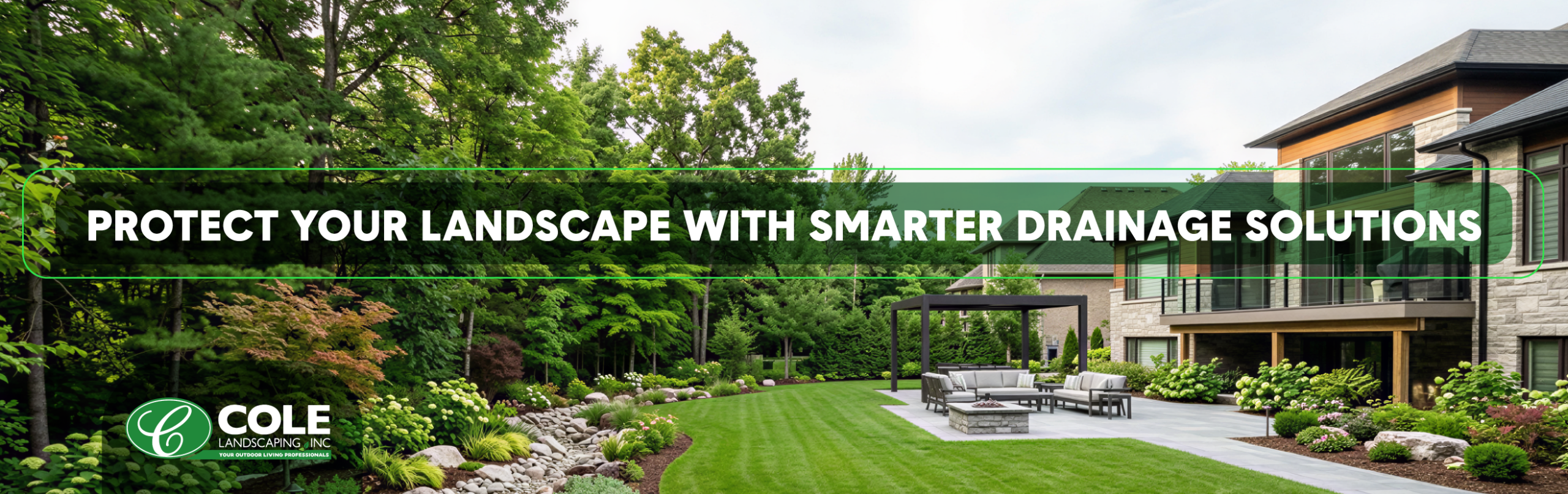
In the right landscape, these can help manage water while becoming part of the overall design.
The best approach depends on the source of the water, elevation changes, soil conditions, and the rest of your landscape.
At Cole Landscaping, We Look at the Whole Property
Fixing drainage isn't simply about moving a puddle somewhere else.
At Cole Landscaping, we design drainage solutions with the surrounding landscape in mind. Our team can evaluate how water moves through the property and determine which solution makes the most sense for the space.
Cole's drainage services include:
Because Cole also provides landscape design, installation, lawn care, irrigation, and hardscape services, drainage can be considered as part of the property's larger landscape rather than as an isolated problem.
The goal is a yard that looks beautiful—and functions the way it should.
Don't Let a Small Water Problem Become a Recurring Landscape Problem
If you're noticing persistent puddles, soggy grass, erosion, or water continually collecting in the same areas, your landscape may need a better way to manage runoff.
Addressing drainage can help protect the investment you've already made in your lawn, gardens, hardscapes, and outdoor spaces.
Cole Landscaping has been serving homeowners throughout Boston's North Shore for more than 30 years, creating and maintaining landscapes designed around both beauty and function.
If water is taking over part of your yard, it may be time to find out why.
Ready to Find Out Where All That Water Is Coming From?
Let Cole Landscaping evaluate how water is moving across your property and help identify a drainage solution that works with your lawn, gardens, hardscapes, and overall landscape.
Request a Cole ConsultationFrequently Asked Questions
How long should water remain in my yard after rain?
Some temporary pooling can happen after a heavy storm, but water that repeatedly remains for long periods or keeps returning in the same area may indicate a drainage issue.
Will adding more soil fix standing water?
Sometimes minor grading adjustments can help, but adding soil without understanding where the water should go can simply move the problem somewhere else.
Does every drainage problem require a French drain?
No. Depending on the property, the better solution could involve grading, catch basins, downspout extensions, dry wells, rain gardens, or another drainage approach.