
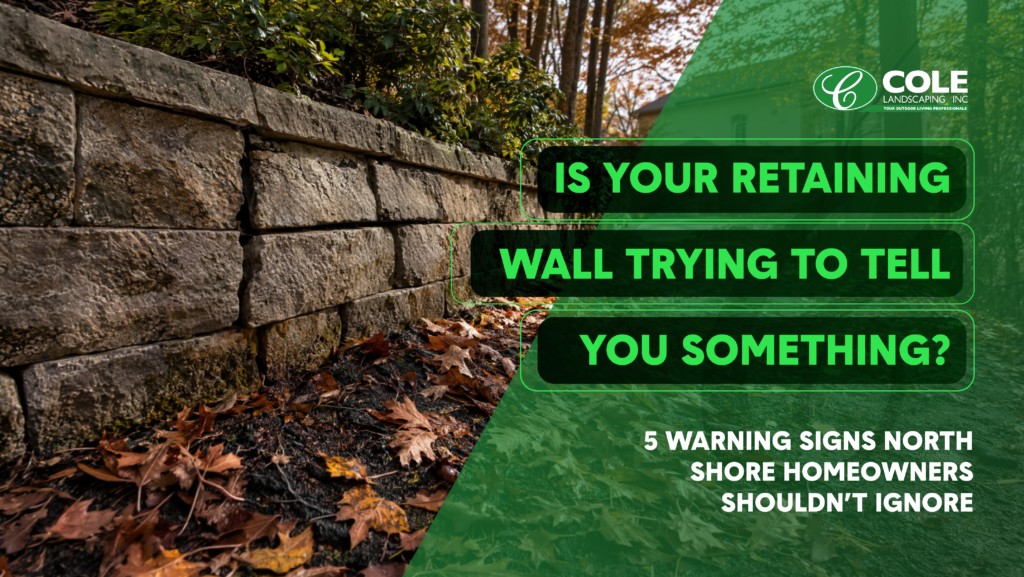
From small cracks to shifting stones, discover the warning signs of retaining wall damage and how to protect your North Shore landscape before winter arrives.
Your Retaining Wall Might Be Sending a Warning
Your retaining wall does more than enhance your landscape. It holds back soil, helps manage slopes, protects outdoor spaces, and keeps your yard functional.
But what happens when your retaining wall starts showing signs of trouble?
For homeowners across Massachusetts' North Shore, November is an important time to pay attention. Heavy rainfall, saturated soil, and approaching freezing temperatures can put additional pressure on retaining walls.
The good news? Many retaining walls show warning signs before serious problems develop. Knowing what to look for can help you take action before minor damage becomes a costly project.
When was the last time you checked your retaining wall?
If you can't remember, these five warning signs are a good place to start.
5 Warning Signs Your Retaining Wall Needs Attention
Your retaining wall may be showing subtle signs of movement, drainage issues, or structural deterioration. Here's what deserves a closer look.
Cracks That Keep Getting Bigger
A small crack might not seem like a big deal, but growing cracks can indicate movement, pressure, or deterioration.
Watch for:- Cracks that widen over time.
- Separation between blocks or stones.
- Crumbling mortar or damaged concrete.
A Wall That's Starting to Lean
Does your retaining wall look slightly different than it did last year?
A wall that leans, tilts, or bulges outward may be experiencing excessive soil pressure or foundation movement.
This can happen when drainage is inadequate, the base shifts, or the wall was not designed for the conditions.
Water Collecting Behind the Wall
Water is one of the biggest threats to retaining wall stability.
When rainwater cannot drain properly, it builds pressure behind the structure, potentially pushing the wall outward.
Signs of drainage trouble:- Standing water near the wall.
- Unexpected water seepage.
- Constantly saturated soil.
- Soil washing out between stones.
Loose Stones or Shifting Blocks
Retaining walls should remain solid and stable.
If stones are coming loose, blocks are shifting, or sections appear uneven, the wall may be experiencing movement beneath or behind the structure.
Sometimes the issue involves the foundation. Other times, it can be connected to erosion, poor drainage, or aging materials.
Soil Erosion Around the Wall
Have you noticed exposed roots, disappearing soil, or gaps developing near your retaining wall?
These changes may indicate that water is carrying soil away from areas that help support the structure.
Over time, erosion can compromise stability and affect nearby landscaping.

Why November Is the Right Time to Check Your Retaining Wall
New England winters are tough on outdoor structures. When moisture enters cracks or collects behind a retaining wall, freezing temperatures can cause expansion and movement.
November offers North Shore homeowners an opportunity to identify concerns before repeated freezing and thawing make existing issues worse.
Your Pre-Winter Retaining Wall Checklist
You don't have to wait until a retaining wall fails to take action.
Repair or Replace? Understanding Your Options
Not every damaged retaining wall needs to be completely rebuilt. Some walls may benefit from targeted repairs or drainage improvements. Others, especially those showing significant movement or structural deterioration, may require reconstruction.
When Repairs May Help
Depending on the wall's condition, targeted repairs or drainage improvements may be appropriate.
A professional evaluation can help identify the cause of the damage.
When Replacement May Be Needed
Significant movement, structural deterioration, or underlying foundation problems may require reconstruction.
An engineering evaluation may be necessary for structural concerns.
The most important step? Identify the underlying problem rather than simply covering up visible damage.
Built for New England. Designed to Last.
At Cole Landscaping, we understand that a retaining wall is more than a decorative feature. It's an essential part of a functional, well-designed outdoor space.
Serving homeowners throughout Massachusetts' North Shore, Cole Landscaping specializes in creating outdoor environments that combine beauty, durability, and practical design.
Our landscaping and hardscaping solutions help homeowners manage challenging slopes, enhance their properties, and create outdoor spaces that complement their surroundings.
Whether you're considering a new retaining wall, replacing an aging structure, or improving drainage around your landscape, our team can help you explore solutions suited to your property's unique needs.
From Rowley and Ipswich to Newburyport, Beverly, and surrounding North Shore communities, Cole Landscaping is dedicated to helping homeowners create landscapes designed for New England living.
Don't Let a Small Warning Become a Big Problem
Your retaining wall works hard throughout the year. Before winter arrives, give it the attention it deserves.
If you've noticed cracking, leaning, shifting stones, or drainage issues, now is the time to seek professional guidance.
Protect your landscape before small problems become expensive repairs.
Contact Cole LandscapingRetaining Wall Design | Installation | Hardscaping Solutions
Frequently Asked Questions
How do I know if my retaining wall is failing?
Common warning signs include widening cracks, leaning or bulging sections, loose stones, soil erosion, and water collecting behind the wall. Significant movement should be evaluated promptly.
Can a leaning retaining wall be repaired?
Sometimes, but it depends on the cause and severity of the movement. A professional evaluation can determine whether repairs, drainage improvements, or reconstruction are necessary.
Why do retaining walls crack during winter?
Moisture, freezing temperatures, frost heave, and soil movement can contribute to cracking. Poor drainage can make these conditions more damaging.
How long should a retaining wall last in Massachusetts?
Lifespan depends on the materials, construction quality, drainage, soil conditions, and maintenance. Properly designed and installed retaining walls can last for decades.
Who installs retaining walls on the North Shore of Massachusetts?
Cole Landscaping provides retaining wall design and installation solutions for homeowners throughout Massachusetts' North Shore, helping create functional and attractive outdoor spaces.