Your Landscape Is an Investment. Winter Tests It Every Year.
On the North Shore, winter damage rarely shows up in winter. It shows up when the snow melts: rhododendrons and boxwood with brown, scorched leaves, arborvitae split open under ice, hedges along the street burned by plow salt, young trees with the bark chewed off at the base. By then the damage is done, and replacing mature plants costs far more than protecting them.
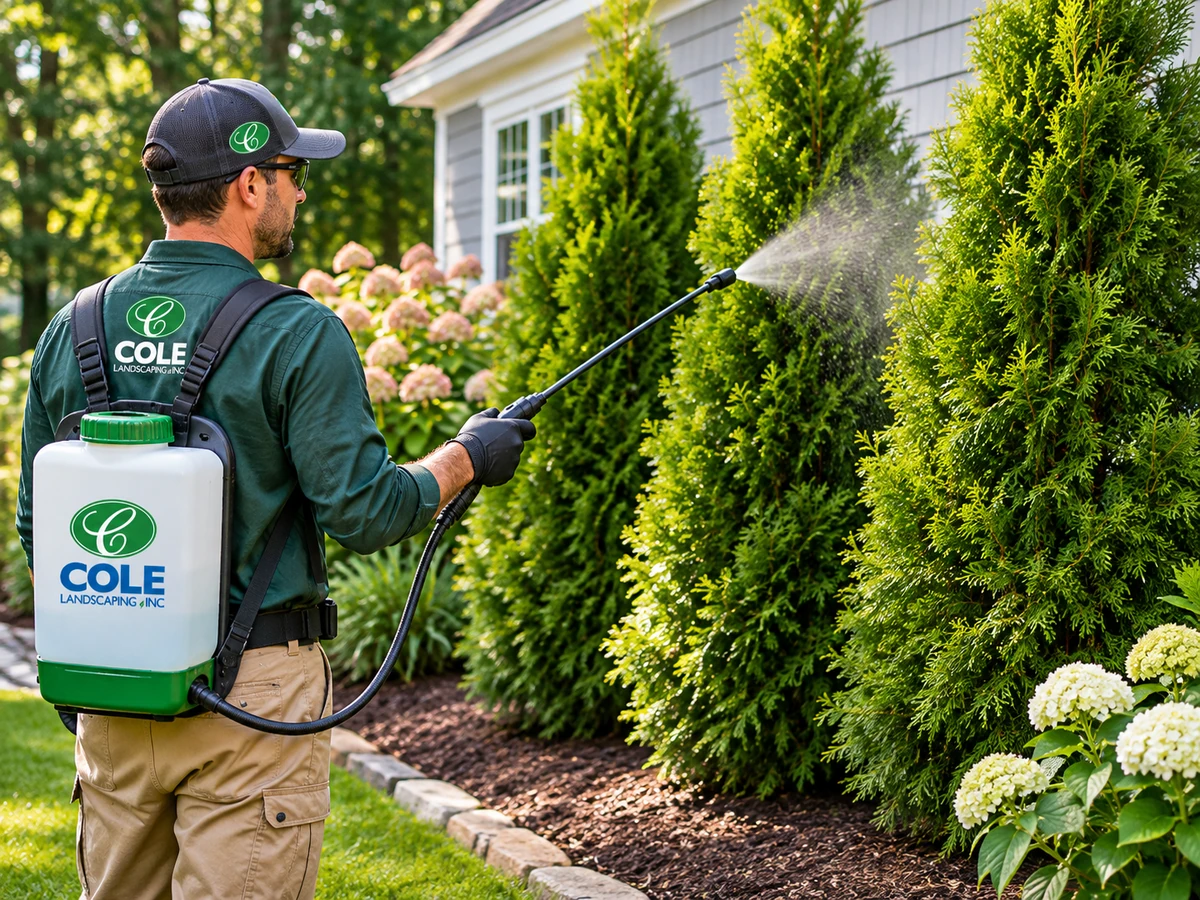
Cole Landscaping protects shrubs, trees, beds and lawns before the hard weather arrives, with anti-desiccant spraying, burlap screens, snow-load support, salt barriers and dormant care. It is the last step of the season for clients on our landscape maintenance programs, and it pairs naturally with plant health care for the trees and shrubs that matter most.

Six Ways Winter Damages Plants
Cold alone kills very few established plants. Wind, salt, ice and hungry animals do most of the harm, and each one has a fix.
Winter Burn
Sun and dry wind pull moisture from evergreen leaves while the ground is frozen and roots cannot replace it, leaving brown, scorched foliage.
Road & Plow Salt
Salt spray from plows and passing traffic burns plants along streets and drives, and salty runoff damages the soil around their roots.
Heavy Snow & Ice
Wet coastal snow and ice bend and split upright shrubs like arborvitae and junipers and snap brittle branches on young trees.
Deer Browse
With little else to eat, deer strip yews, arborvitae and rhododendrons, often leaving shrubs bare to the height they can reach.
Rodent Damage
Voles and rabbits feed on bark under the snow, and a young tree chewed all the way around its trunk can die by spring.
Frost Heave
Repeated freezing and thawing can push new plantings and perennials up out of the soil, exposing roots to cold and drying air.
Matched to Each Plant and Each Exposure
Not every plant needs the same treatment. We walk the property, note what is exposed to wind, salt and deer, and protect accordingly.
Anti-Desiccant Spraying
A protective film sprayed on broadleaf and needled evergreens that slows moisture loss through the leaves, applied on a mild, dry day once plants are dormant.
Best for: rhododendron, boxwood, holly, mountain laurel and arborvitae.
Burlap Screens & Wraps
Burlap screens set on stakes block drying wind and salt spray while letting the plant breathe. Wraps are used where a plant needs full cover.
Best for: exposed foundation plantings and new shrubs.
Snow-Load Support
Upright evergreens tied loosely with soft twine or wrapped so heavy snow and ice cannot bend them open or split the leaders.
Best for: arborvitae, upright junipers and multi-stem shrubs.
Salt Barriers
Burlap barriers along drives, walks and roadsides that catch plow spray before it reaches beds and hedges.
Best for: plantings within reach of plows and road traffic.
Deer & Rodent Guards
Deer repellent applications, protective netting, and trunk guards that keep voles and rabbits off young bark.
Best for: yews, young trees and properties near woodland.
Watering, Mulch & Dormant Care
Deep watering before the ground freezes, a layer of mulch to steady soil temperature, and dormant pruning of damaged or crossing branches.
Best for: new plantings and plants recovering from stress.
Timing Matters
Protection goes on after plants have gone dormant and before the ground freezes hard, and screens come off in spring once the danger of drying wind has passed. Put it on too early and plants can overheat or delay hardening off. Take it off too late and new growth suffers. We schedule both trips for you, so nothing gets missed.
From the Last Mow to the First Snowfall
Winter protection is one part of caring for a landscape all year. Explore the services that come before and after it.
Coastal Winters Need Coastal Know-How
The North Shore gets a harder mix than inland Massachusetts: ocean wind that dries out evergreens, salt carried on the air near the water, wet heavy snow from coastal storms, and freeze-thaw swings that come and go all winter. A property in Gloucester or Ipswich faces different exposure than one tucked into the woods in Boxford or Topsfield, and we protect each one accordingly.
Our crews work from Rowley and serve homes and commercial properties across the North Shore and Southern New Hampshire, including Newburyport, Beverly and Hamilton. View all service areas.