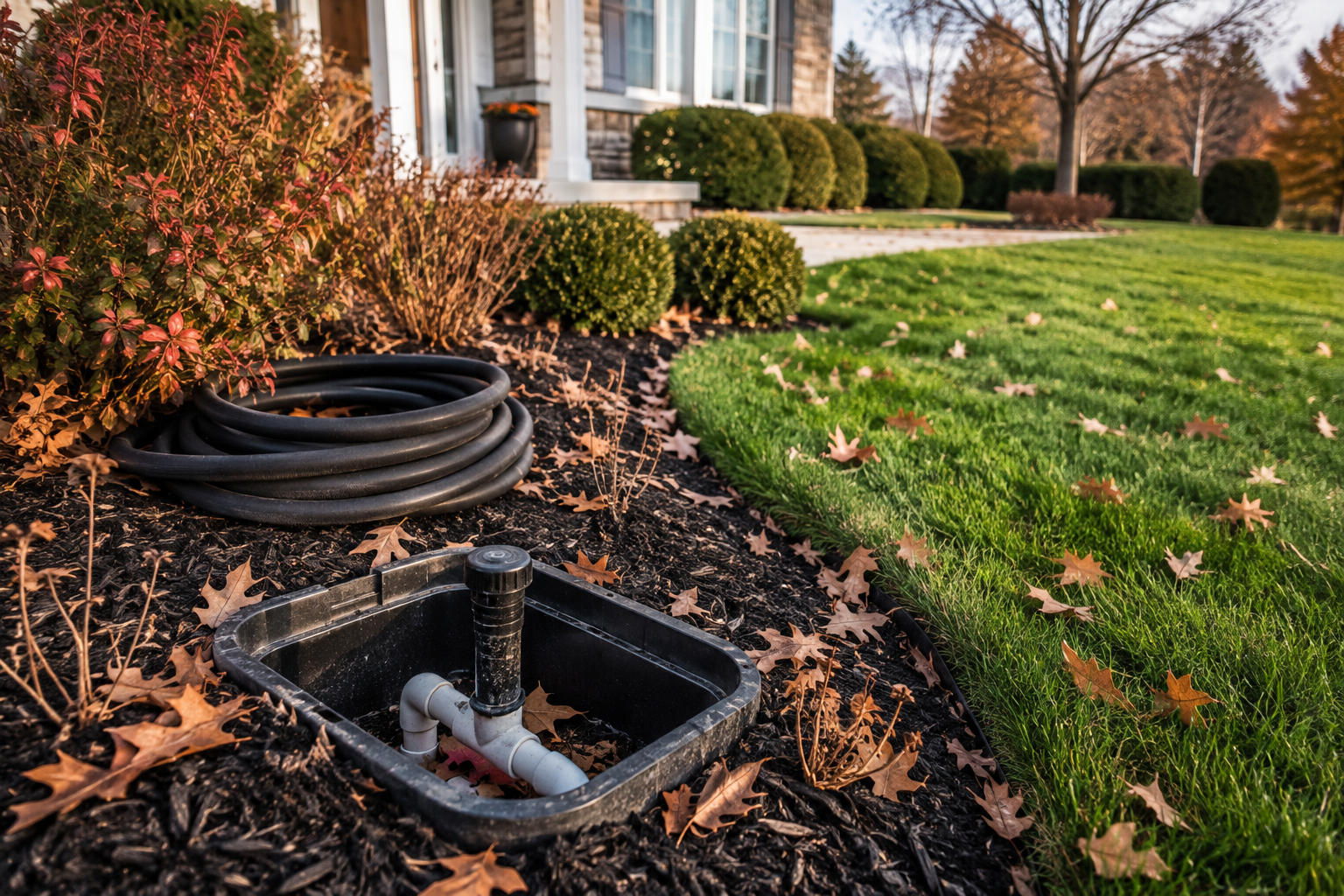
Skip the Blowout, and Your Sprinkler System Turns Into a Multi-Thousand-Dollar Repair Bill
Water expands when it freezes. If it's sitting in an underground irrigation line, a valve manifold, or a backflow preventer when the first hard freeze hits, it cracks copper. It splits PVC. It breaks brass. And you don't find out about any of it until you turn the system back on in April and every zone is spraying water into the ground. A properly performed fall blowout — pushing every drop of standing water out of the system with a commercial-grade air compressor before the ground freezes — is the single most important piece of irrigation maintenance you can schedule. And in New England, it's not optional. It's the difference between a system that runs another decade and a system that needs $3,000 in repair calls in the spring.
Cole Landscaping performs sprinkler winterization and fall blowout services across the North Shore of Massachusetts every October and November — for residential systems, commercial properties, and existing Cole clients scheduled automatically each fall. In-house crews, proper CFM-rated compressors, zone-by-zone verification, and documentation of the completed service. See our full sprinkler & irrigation services page for the year-round program.
Three Things That Separate a Proper Winterization From a Shop Vac and a Prayer
DIY blowouts and undersized-equipment jobs are the two most common reasons irrigation systems fail over winter. Here's what a professional service actually delivers — and why the equipment matters as much as the technique.
Commercial-Grade CFM Compressors
The compressor size is not a detail — it's the entire game. A residential portable compressor moves 3–5 CFM, which isn't enough to push water through anything but the smallest irrigation zones. Commercial blowouts require 80–200+ CFM depending on the system, delivered at controlled pressure to avoid damaging heads and valves. Cole runs commercial-grade tow-behind compressors specifically for winterization work. This is what actually clears the lines. Everything else is what makes the process safe for the system.
Zone-by-Zone Verification & Backflow Protection
Every zone gets run individually until all standing water is cleared through the sprinkler heads — verified visually, not assumed. Backflow preventers, which are the most vulnerable component of any system to freeze damage, get particular attention: the internal chambers are cleared, ball valves are set to the correct position for winter, and drain caps are opened where the assembly design allows. Skipping backflow prep is one of the most expensive mistakes we see on systems that came from other winterization services.
Controller Shutdown & Spring Startup Included
The blowout is only half the winterization. The controller has to be properly shut down — either turned off entirely or set to "Rain/Off" depending on the model — and the transformer disconnected in the recommended way. Cole documents the controller settings before shutdown so spring startup can restore the schedule without a re-programming session. For Cole clients on annual programs, spring startup is bundled with fall blowout as a single seasonal service pair — one call, both visits scheduled, no gaps.
Full Fall Protection for Your Irrigation Investment
Sprinkler winterization is one component of a broader fall preparation program. Cole coordinates the blowout with other irrigation and landscape services so your system, your lawn, and your property all go into winter in the right condition.
Book Early — Once the First Hard Freeze Hits, You're Out of Time
In most years on the North Shore, sprinkler winterization should be scheduled between mid-October and mid-November. The window closes fast: once soil temperatures drop below freezing and stay there — usually by late November — any remaining water in the system is already frozen and any damage is already done. Waiting for "the first cold snap" as a reminder is exactly how systems get damaged. The blowout has to happen before that first freeze, not after.
Cole handles winterization across the full North Shore including Beverly, Hamilton, Ipswich, Newburyport, Gloucester, Danvers, Middleton, and surrounding communities. Existing Cole clients on annual irrigation programs are scheduled automatically each fall. New clients — including those with systems installed by other companies — should reach out by early October to secure a preferred date. We service systems we didn't install; a first-visit inspection identifies any pre-existing issues before the blowout so nothing gets blamed on us in the spring that was already broken in October.